Full stack isolation
SaaS organizations are motivated by the economies of scale that come with sharing infrastructure resources across tenants. At the same time, there are real-world factors that might result in a SaaS architecture where some or all of the tenants within your environment require dedicated (siloed) infrastructure. Compliance, noisy neighbor, tiering strategies, legacy technologies—these are among the long list consideration that could lead you to offering tenants their own infrastructure. This is referred to as a siloed or full stack isolation SaaS.
This approach is frequently mistaken for a managed service provider (MSP) where a company’s product is installed and managed on a one-off basis for individual customers. This approach, while valid, does not align with the SaaS tenets. The key to a SaaS model is to adopt a value system where all tenants are managed and operated through a single, unified experience. This means that every tenant is running the same version of the software, they all get deployments at the same time, they are all onboarded through the same process, and they are all managed through a single operational experience, which applies to all tenants.
This approach doesn’t deliver the cost efficiencies of a shared infrastructure model (pool). Its distributed nature can also make operations and deployment more complex. Still, done right, a full stack model can still achieve the agility, innovation, and operational efficiency goals that are central to the SaaS mindset.
The diagram in Figure 7 provides a clearer picture of the full stack isolation (silo) model. Each tenant environment in this model is straightforward. You’ll see here that we’ve provided a separate VPC for each tenant. These VPCs hold the full isolated stack that will be used by each tenant. The compute and storage constructs could be composed from any combination of AWS services. The key is that each tenant environment is meant to have the same infrastructure configuration and the same version of your product. So, adding new tenants is as simple as provisioning another VPC with the same infrastructure footprint for each tenant.
You’ll also notice that this model use Amazon Route 53 to route the incoming traffic to the appropriate VPC. The routing relies on a model where subdomains are assigned to each tenant. This is a very common pattern in SaaS environments. This routing can also be achieved by inspecting the contents of a tenant JWT token, determining their tenant context, and triggering routing rules through an injected tenant header. This approach, however, can push account limits and might require tuning to address the latency of a runtime resolution of a tenant’s identity. Still, it is a valid option for some SaaS environments.

Figure 7: Full stack (silo) isolation
While this example illustrates a VPC-per-tenant model, there are other architectures that can be used to implement the full stack model. Some organizations might choose to use an account-per-tenant model where each tenant environment is deployed in a separate provisioned account. The option you choose will vary depending on the number of tenants you need to support and the overall management experience that you’re targeting. In some cases, the number of tenants you need to support could exceed the number of VPCs that can be created within an AWS account.
Unified onboarding, management, and operations
The real SaaS elements of the full stack isolation (silo) model come in when we look at the onboarding, management, and operations of this experience. To realize the full value proposition of SaaS, this model must introduce a collection of services that can be used to manage and operate all of the tenant environments.
The diagram in Figure 8 provides a view of these extra layers of services. What we introduce here is an entirely separate set of services that are built around the needs of the SaaS provider’s administration and management experience.
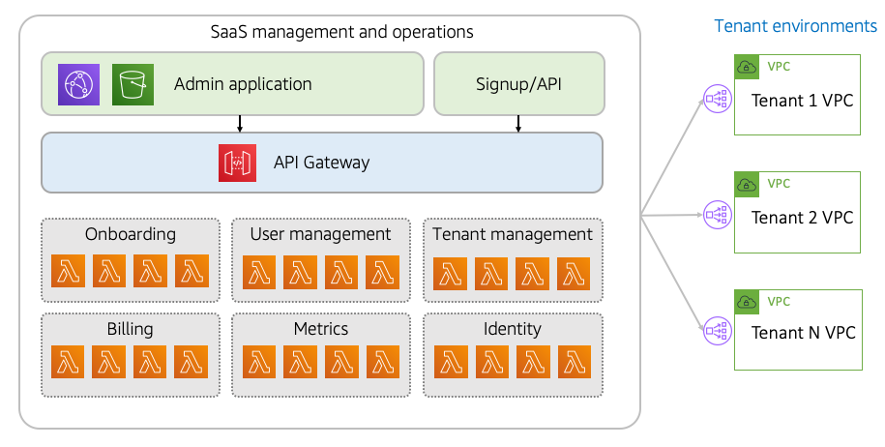
Figure 8: Managing full stack isolated environments
While the stack of our tenant environments is shaped by domain, legacy, and other requirements, the stack of our management experience is completely driven by the goals and usage patterns that can be quite different than those that apply to tenants.
This management very much conforms to a classic serverless SaaS application model. You’ll see that we have two entry points into our administration environment. One is the Admin application that uses Amazon CloudFront and Amazon S3 to serve up the application experience that is used by SaaS administrators to manage and configure tenant environment. You’ll also see the signup and API experience highlighted here. This represents the ability to trigger tenant onboarding via a public API request. This API can also be part of a SaaS provider’s developer API experience.
Finally, we’ve also highlighted a collection of microservices that represent the shared services that are used to orchestrate the onboarding, management, and operations experience. We’ve chosen Lambda as the model for our microservices, based on its management, scale, and cost efficiency model. These services could be implemented with other AWS compute services.
On the right-hand side of the diagram, you’ll see the individual VPCs that represent each of our tenant environments. In this VPC-per-tenant model, you’ll need to open a valid path for your management plane to be able to configure and access the resources of these tenant environments. AWS offers a number of options for this, including AWS PrivateLink, VPC peering, and Amazon EventBridge. The option you choose will depend on the nature of the management experience you are building.
