Transform raw operational data into actionable insights using real-time analytics and machine learning capabilities. Enable faster response to operational changes through automated event processing and visualization.
Overview
This Guidance demonstrates how airlines can transform their operational capabilities through a comprehensive near real-time data hub on AWS. It shows how to integrate diverse data streams from aircraft, airports, and critical aviation data sources into a unified solution that delivers immediate operational insights and predictive analytics. The architecture helps airlines achieve enhanced situational awareness, improved decision-making capabilities, and automated responses to operational events. By implementing this Guidance, organizations can realize significant benefits including reduced delays, optimized resource utilization, improved customer experience, and more efficient operations through AI/ML-driven insights. This scalable and secure architecture ensures airlines can process, analyze, and act on massive volumes of near real-time data while maintaining data integrity and compliance
Benefits
Accelerate operational decision-making
Streamline multi-source data integration
Unify diverse operational data streams from flight operations, maintenance systems, and third-party sources into a centralized hub. Eliminate data silos while maintaining security and compliance requirements.
Optimize airline operations costs
Leverage serverless and managed services to reduce infrastructure management overhead. Scale analytics resources automatically based on demand while maintaining consistent performance.
How it works
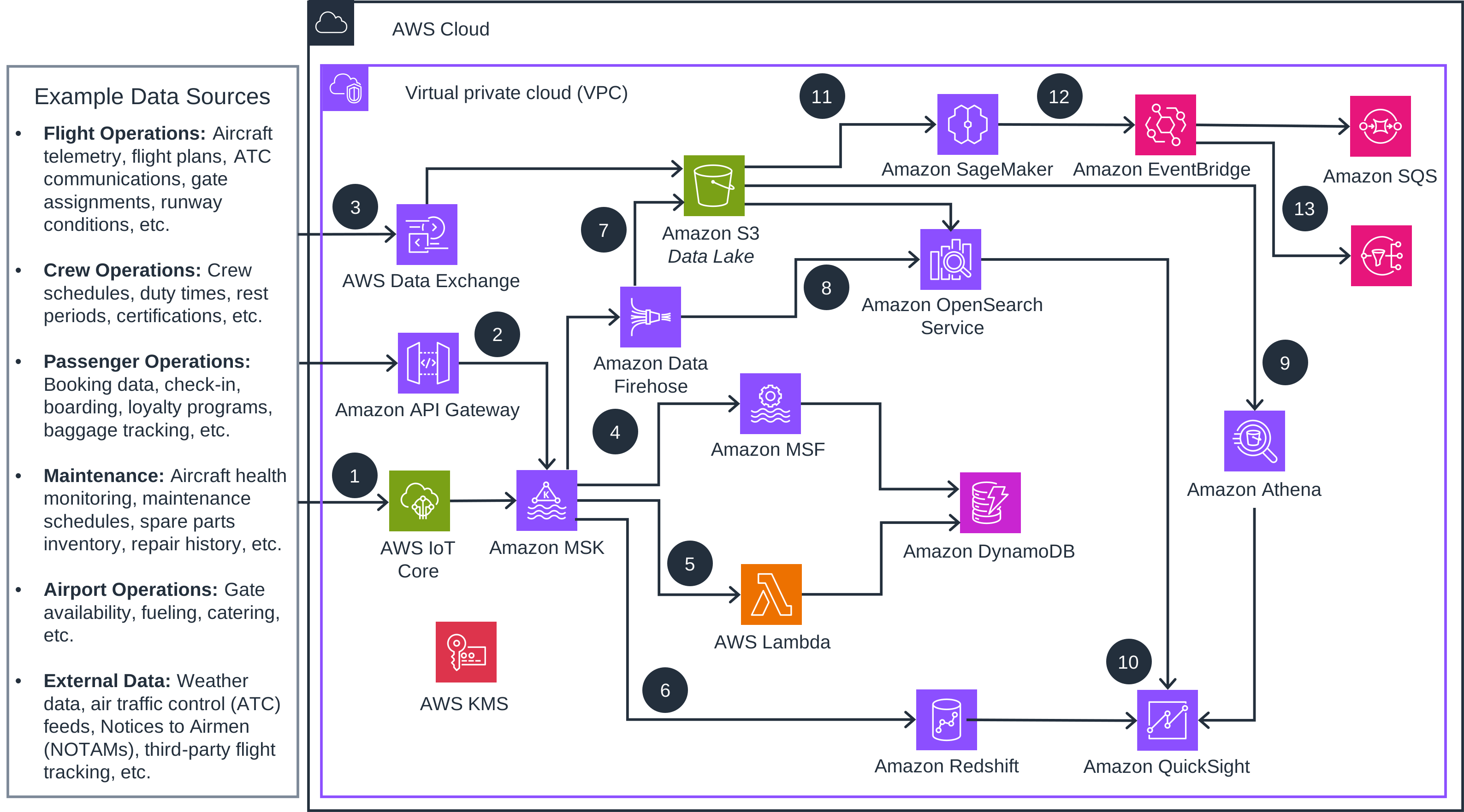
This architecture diagram illustrates how to effectively support a near real-time Operational Data Hub for Airlines on AWS. It shows the key components and their interactions, providing an overview of the architecture's structure and functionality.
 Step 1
AWS IoT Core ingests data from sensors (Flight, Airport, Baggage, and Maintenance System.)
Step 2
Amazon Managed Streaming for Apache Kafka (Amazon MSK) ingests high-volume, real-time data from all operational systems through Amazon API Gateway.
Step 3
Subscribe to third-party data products like weather forecasts or global flight tracking with AWS Data Exchange.
Step 4
Amazon Managed Service for Apache Flink (MSF) provides stateful, highly scalable stream processing for immediate operational insights.
Step 5
AWS Lambda performs event driven processing for tasks like storing telemetry data or baggage tracking data in Amazon DynamoDB.
Step 6
Store structured and semi-structured data on Amazon Redshift for complex analytical queries, historical trend analysis, and large-scale reporting.
Step 7
Amazon Data Firehose performs ETL and delivers data to Amazon Simple Storage Service (Amazon S3) Data Lake, which stores all ingested data in its original, immutable format and stores processed, cleaned, and enriched data optimized for analytics and ML training. AWS Key Management Service ensures data encryption at rest and in transit.
Step 8
Amazon OpenSearch Service provides powerful search and visualization capabilities for operational data.
Step 9
Amazon Athena provides a serverless query service to analyze data in Amazon S3 using standard SQL.
Step 10
Amazon QuickSight provides actionable insights to operations teams.
Step 11
Amazon Sagemaker develops, deploys, and manages ML models for various operational and business use cases.
Step 12
Amazon EventBridge automates complex responses to real-time events.
Step 13
Amazon Simple Notification Service (Amazon SNS) and Amazon Simple Queue Service (Amazon SQS) ensure timely communication of critical events and reliable message delivery for actions.